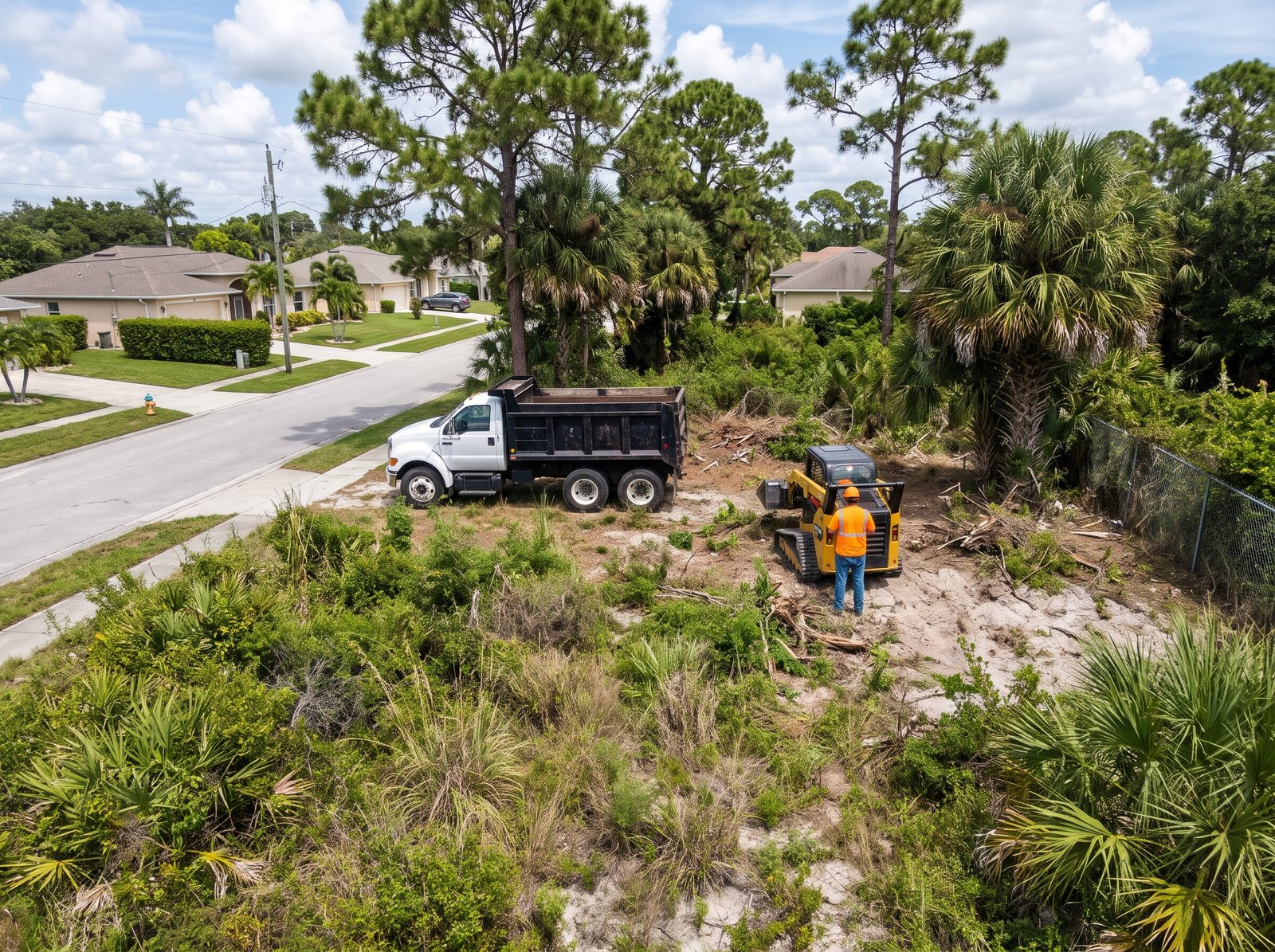
Clearing a lot without the right approvals can mean fines, stop-work orders, required replanting or wildlife violations, and a project that stalls just when you need it moving. The tricky part in Southwest Florida is that there is no single rule. The answer depends on which county or city the land is in, the lot size and zoning, and whether protected species or wetlands are present. Use this guide as a checklist, then confirm with the permitting office for your address, because codes and fees change.
Step 1: Figure Out Who Has Jurisdiction
Start with the property's location. Unincorporated Lee County, the cities of Cape Coral, Fort Myers and Bonita Springs, the Village of Estero, and the counties of Collier, Charlotte and Hendry each have their own land development codes. A lot in Lehigh Acres falls under unincorporated Lee County; a lot a few miles west may fall under a city with different rules. Your property appraiser record shows which one applies.
Step 2: Check the Local Vegetation and Tree Rules
Unincorporated Lee County
Lee County's residential building guide says a vegetation removal permit is required for property over 5 acres, over 2 acres on Pine Island, or any property on a barrier island. Single-family lots smaller than that are generally exempt from the tree permit, but protected species rules still apply. Commercial and larger parcels need their own approval.
Collier County
Collier uses a Vegetation Removal and Site Filling Permit for clearing and filling before a building permit is issued. Under the county's land development code, that permit is tied to an individual single-family lot once a building permit application has been submitted and accepted as sufficient, so clearing a vacant lot well ahead of a build is restricted. Golden Gate Estates is handled differently, so check the rules for that area specifically.
Cape Coral
Cape Coral lists land clearing and fill as site development work that needs city approval, and its protected species code applies to clearing, excavation, tree cutting and even mowing on vacant lots. See our separate guide to Cape Coral lot clearing for details.
Other cities and counties
Fort Myers, Bonita Springs, Estero, Charlotte County and Hendry County each set their own rules. If you are unsure, call the local permitting or environmental office before scheduling work.
Step 3: Look for Gopher Tortoises
Gopher tortoises are protected statewide and are common on dry, sandy lots. The Florida Fish and Wildlife Conservation Commission (FWC) says no permit is needed if all burrows are avoided by 25 feet in all directions. If work has to come closer, an FWC relocation permit is required, and only authorized gopher tortoise agents can capture and move the tortoises. FWC also warns that clearing within 25 feet of a burrow on a neighboring lot can still create liability. Burrows have a distinctive half-moon shaped opening and a sandy apron in front.
Step 4: Look for Burrowing Owls
Florida burrowing owls nest in open, sandy ground, which makes vacant lots in Cape Coral and other parts of Lee County prime habitat. In Cape Coral, the city's procedures use a buffer of at least 10 feet around a burrow outside nesting season and at least 33 feet during nesting season, February 15 to July 10. If the buffer cannot be maintained, an FWC permit is needed before the burrow can be disturbed, and Cape Coral advises applying weeks ahead. Inactive burrows are protected as well.
Step 5: Rule Out Wetlands
Low areas that hold water for part of the year, especially with wetland plants such as cattails, sawgrass or cypress, may be regulated wetlands. Clearing or filling them can require state and sometimes federal approval. If you suspect wetlands, have an environmental consultant evaluate the site before any work. It is far easier to adjust the plan than to restore a wetland after the fact.
Step 6: Decide What Happens to the Debris
Hauling cleared material to a disposal or recycling site is the most common approach. Burning is more restricted than many owners expect. Florida requires Florida Forest Service authorization for land-clearing pile burns, a written pile burning plan, and setbacks from occupied buildings, roads and wildlands. For non-residential land clearing without an air curtain incinerator, the setback from occupied buildings is 1,000 feet. Those rules make burning impractical on most residential lots. Forestry mulching is another option where you do not need bare dirt.
What Usually Does Not Need a Clearing Permit
Routine mowing, trimming and taking down dead trees or ones broken in a storm are often treated differently from clearing for development, but even mowing can be restricted near protected burrows, as Cape Coral's code shows. When in doubt, ask first.
A Practical Permit Checklist
- Confirm the jurisdiction from the property appraiser record.
- Ask the permitting office whether clearing is covered by your building permit or needs its own approval.
- Walk the lot, or hire a consultant, to look for tortoise and owl burrows and wetland signs.
- Mark trees that must be preserved on your site plan.
- Plan how debris will leave the site.
- Schedule clearing only after approvals are in hand.
Where We Fit In
We do not issue permits or perform wildlife surveys, but we schedule land and lot clearing around your approvals and follow the site plan you provide, then move straight into grading and site prep. For the full sequence, read getting a lot ready to build.
Frequently Asked Questions
If I do the clearing myself, do I still need approval?
It depends on the jurisdiction, lot size and zoning, not on who does the work. Some single-family lots are exempt from tree permits, but protected species rules apply everywhere. Ask your county or city before you start.
What are the risks of clearing without approval?
Consequences can include fines, stop-work orders, required replanting and, if protected wildlife is harmed, state or federal enforcement. Fixing it afterward almost always costs more than getting approval first.
How long do clearing approvals take?
Simple approvals can be quick, while sites that need a gopher tortoise relocation or burrowing owl permit through FWC take longer. Start the process as soon as you have a survey and site plan.
Do I need a permit to remove invasive plants like Brazilian pepper?
Removing invasive species is often treated more leniently, but the rules differ by location and protected species protections still apply. Confirm with your local office before clearing a large area.
Have your approvals lined up, or want to talk through the next steps? Call or text 914-562-4457 or request a quote. We are based in Fort Myers, and every job is quoted after we see the site.